
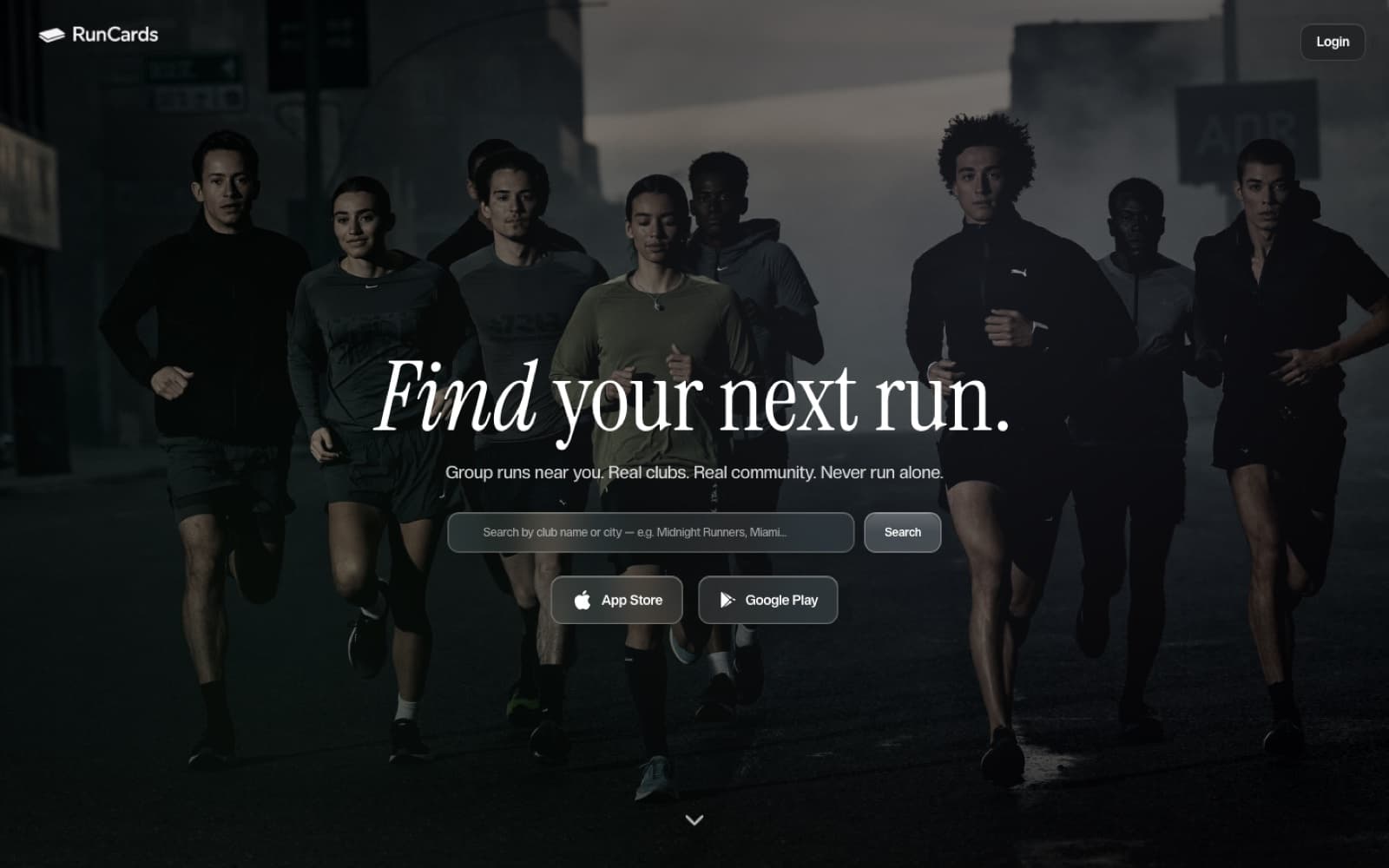
Find your next run. A cross-platform running-community product — runners discover group runs and clubs, and clubs promote events, manage registrations, and grow their community.
Live now on the App Store and Google Play.
Runcards is a two-sided running community. Runners find group runs, connect with other runners, and keep a profile of their pace and history. Run clubs promote events, manage registrations, run a members' chat, and grow their following.
The whole product is built around three linked cards that flow into each other as you browse, register, and message.
run.cards
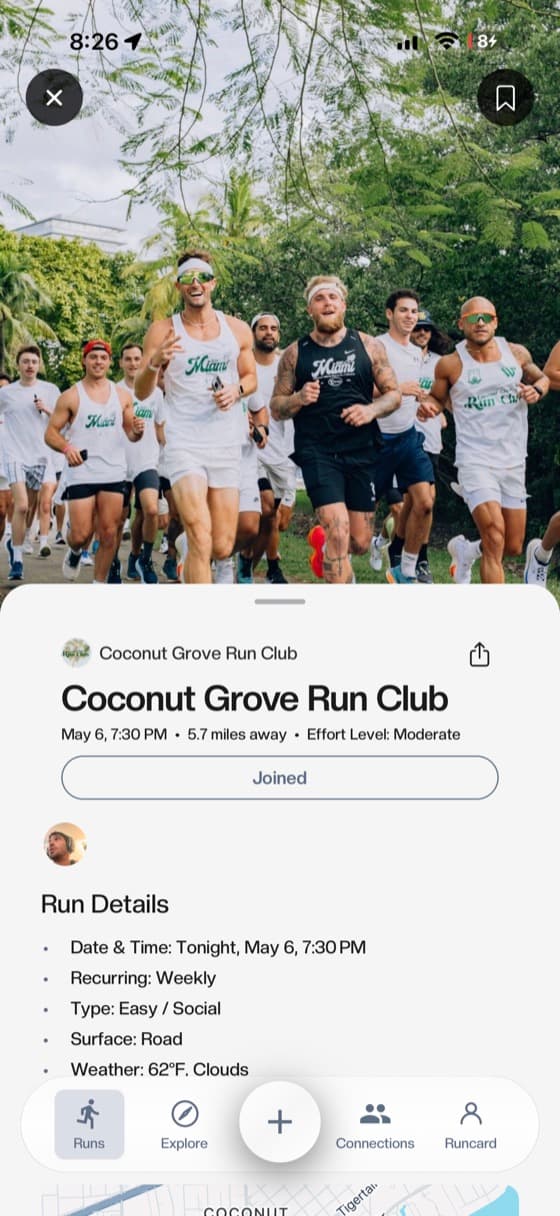
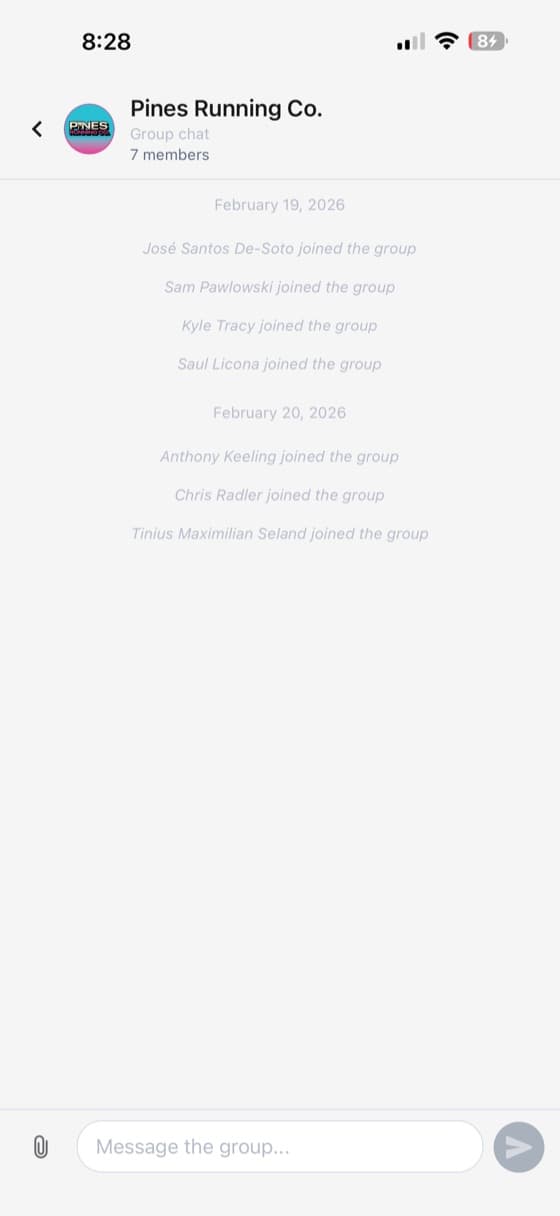
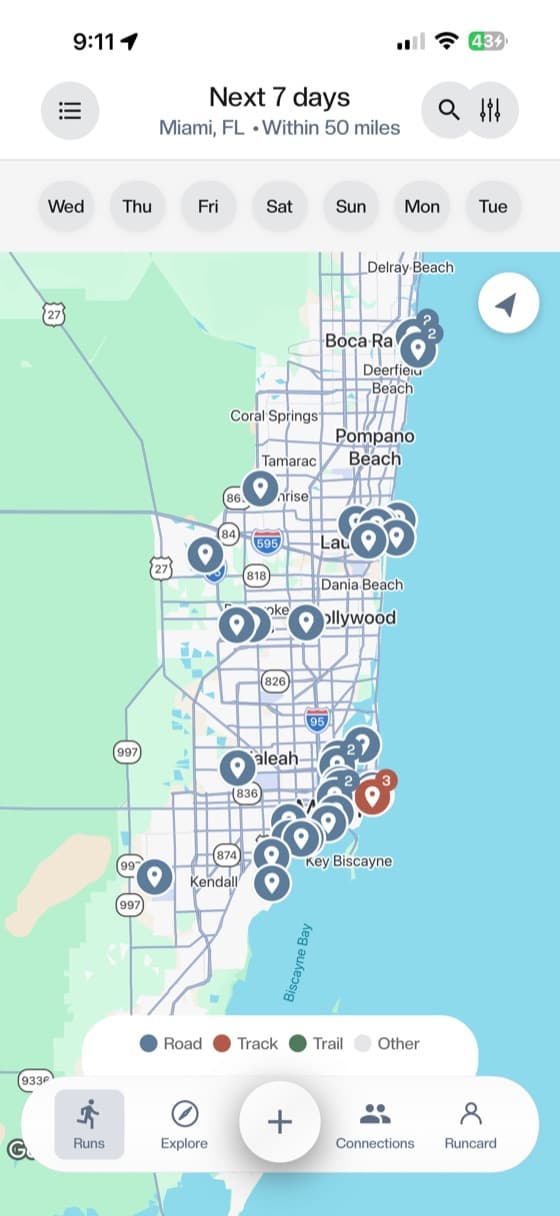
Runcard
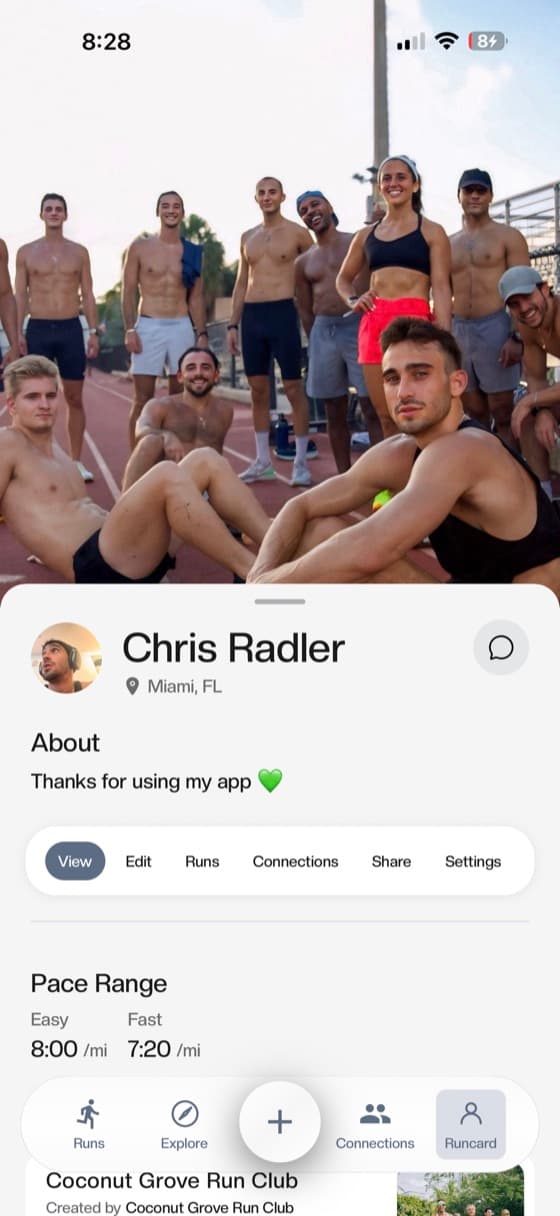
A runner's profile — pace, bio, photos, and a linked Strava. Completion is gated before a runner can join runs or clubs, and the card can be shared as a generated image.
Club card
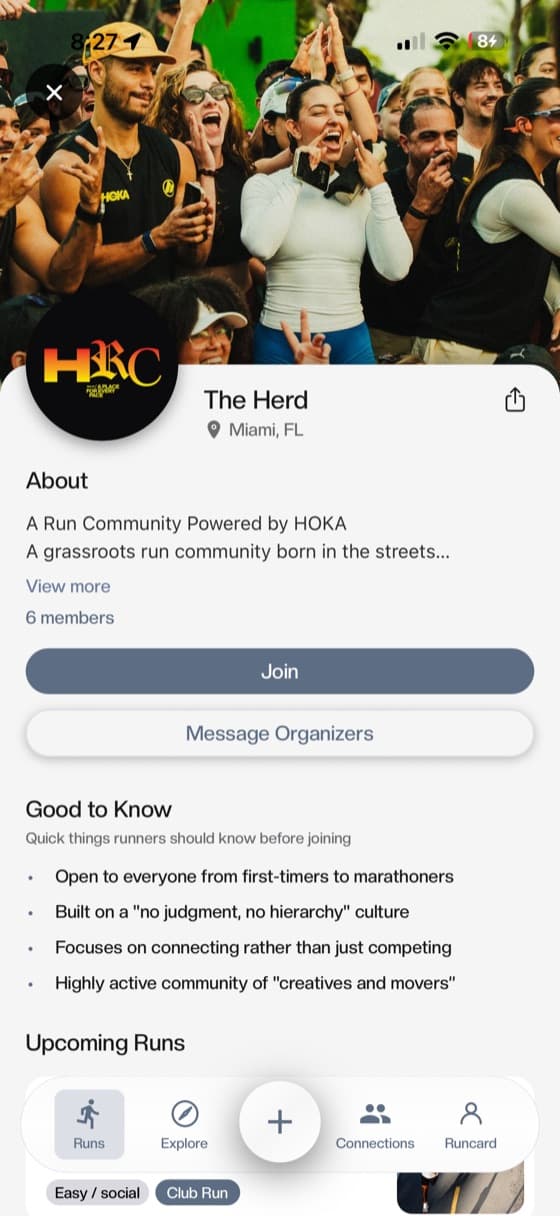
A run club's public face — location, pace, description, hero image, upcoming runs, and member ratings. It surfaces everywhere a runner taps a club.
Meeting card
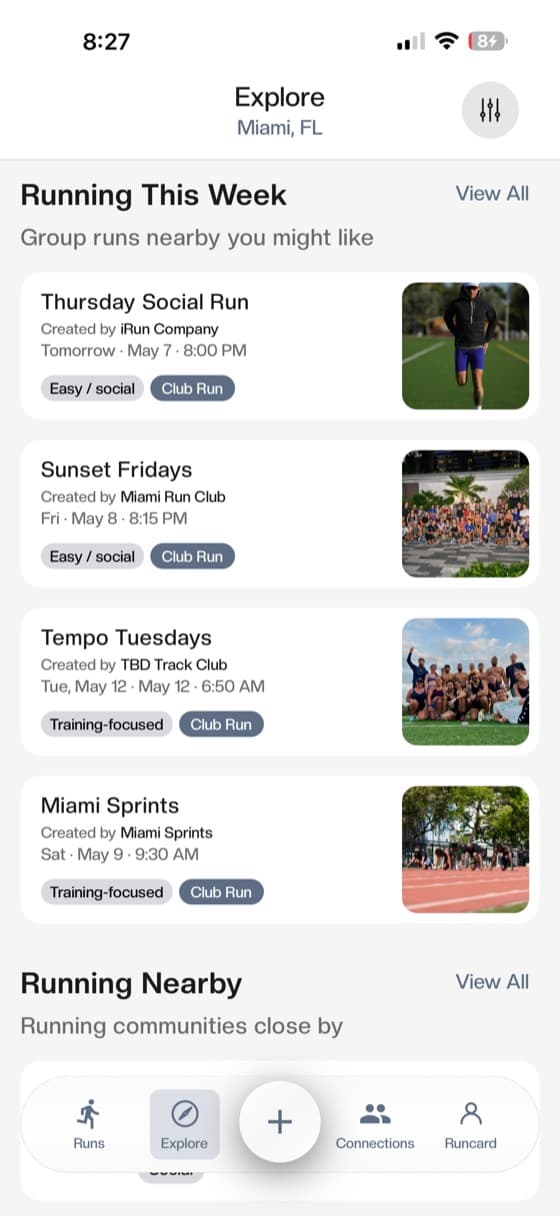
One run or event — date, time, location, distance, and who's registered. One-off or recurring, organized by a club or created casually by a runner.
Discover
Browse runs and clubs near you with location, date-range, and pace filters — tap through from a run to its club to the next meeting.
Register & manage
Runners join a run in a tap; clubs see their roster and manage who's coming.
Connections
Follow runners and clubs to build a running network, right from cards and participant lists.
Real-time messaging
Direct messages and a per-club group chat, backed by a live WebSocket layer.
Recurring runs
Weekly series generate their upcoming instances automatically, with timezone and recurrence handled server-side.
Strava-connected
Runners link Strava to enrich their runcard with real activity context.
The piece that makes Runcards more than a directory: a studio that lets a run club market itself like a brand — generating content and distributing it everywhere, automatically.
AI image & video
Clubs generate branded post imagery and motion video backgrounds for their runs — no designer required.
Marketing briefs
A club's events turn into ready-to-post social content, structured from a brief.
Multi-city distribution
Publish distinct, city-specific content across social accounts through a single pipeline, so each market gets its own post — not a copy-paste blast.
FastAPI + MongoDB
An async Python backend (FastAPI + Motor) with strict Route → Service → Repository → Model layering, so business logic stays out of the routes and the database.
React Native (Expo)
One codebase ships the iOS and Android apps — React Navigation, TanStack Query, secure token storage, and Apple sign-in.
React console
A React web console (Radix UI) for clubs and operations, with cookie + CSRF auth distinct from the mobile bearer-token flow.
Real-time layer
A WebSocket manager powers live direct messages and club group chat with reconnect handling.
Integrations & media
Strava, Google Sheets, and S3 media storage, plus the AI generation and social-publishing pipelines behind the content studio.
Cloud
The backend runs on Railway and the web app on Vercel, with CI running backend tests and the web build on every change.