
An engine for autism innovation — and the Navigator that makes the catalog matchable. Multiple convenes families, entrepreneurs, funders, and experts around the world's most comprehensive autism-tech catalog. I built the platform they navigate with: a staff console, a family intake, and a matcher that only ever surfaces companies they stand behind.
Family intake, staff console, and matcher — live. Families get a private link; staff review before any company is shown.
The world's most comprehensive autism-tech catalog, mirrored from the Hub's Joomla export. Accelerator applicants sit beside them as on-radar — families never see those unless Multiple later vets them.
Multiple's alumni and related list. The export had almost no vetting signal — this is the list that turns the gate on. Only these companies can ever reach a family.
The first six left hundreds of companies unreachable. Learning & school, daily living, mental health, health, and family navigation are now first-class — the dimensions a family actually picks.
Tied to a company record where they belong; orphans parked and visible rather than dropped. Product descriptions are sparse, so company text and composed summaries carry matching.
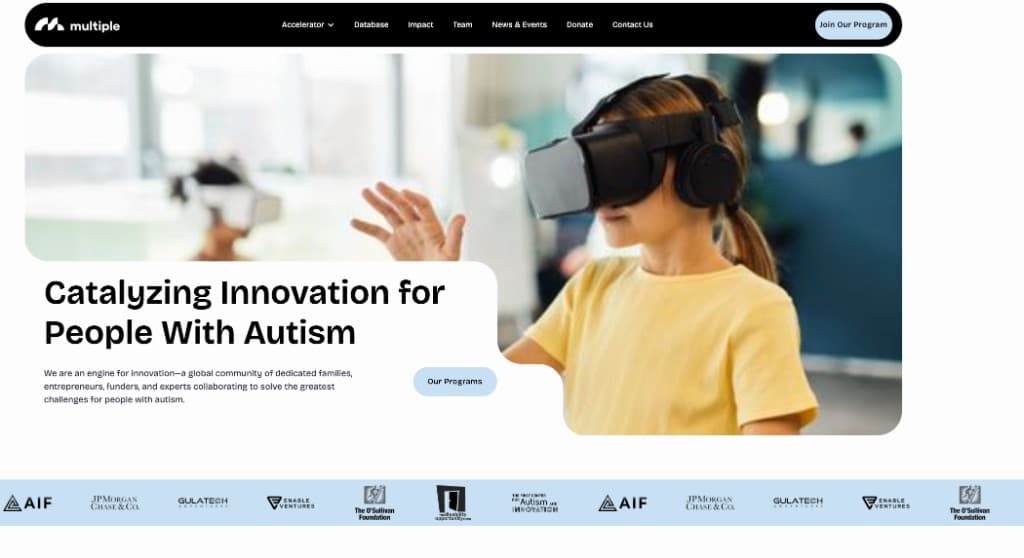
Multiple is a non-profit innovation platform for the autism community — an accelerator, a global network of founders, and the steward of the autism-tech database: companies building communication tools, sensory products, diagnostic platforms, employment programs, and clinician support systems.
Their contracted promise to families is strict: only vettedcompanies surface in the Navigator. The export carried almost no vetting signal — so the platform earns that trust through Multiple's alumni list, a provenance ledger, and fail-closed gates rather than guessing. Accelerator applicants sit in the catalog as on-radar. They are never shown until someone promotes them.

Multiple Navigator is the staff console and the family-facing intake that mirrors the Hub export in Postgres, normalizes it, and matches people to companies. Nothing writes back to Joomla — a read-only mirror with its own enrichment lane, provenance ledger, and a matcher staff release before a family sees it.
The Hub dashboard treats empty cells as “In Process,” which makes completeness look far worse than it is. The console shows field coverage as it actually is. A family's answers that the catalog cannot yet match — how they communicate, what language they need — are kept for a person to read, not quietly discarded.
Four destinations. Everyone lands on Vetted. A notes inbox sits off the client nav so it does not become another tab.
Vetted
The companies Multiple stands behind. Readiness against the matcher's real bar — description, route, age — thin-route warnings, and the questions that still need a person.
Form
Run an intake, send a family their own link, and judge every shortlist. Named, test or real, so a preview never sits next to a client's answers.
Overview
Honest coverage for the whole catalog — Hub export plus the accelerator pipeline. Match-ready means a description, a route, and an age range. Empty cells are empty, not “In Process.”
Review
Hardest first. Routine fields in a batch. The machine's own adoptions in a list you can spot-check. Age and audience stay a person's job.
The matcher is no longer a six-question prototype. Families fill their own form; staff judge the shortlist; the catalog grew the routes it was missing.
A family page that waits for a person
Families fill the intake on their own link. Nothing is shown until staff release it — looks right, need more companies, or something's wrong. They get a private URL to come back to.
Who is asking
Caregiver, self, clinic, school, or workplace. A parent never sees a district vendor. Five asker lanes, one audience gate — the same eligibility rule the catalog already had, now pointed at the person filling the form.
Shortlists grouped by the need
Three companies shown per route, the rest folded, empty routes shown as gaps. Reasons in plain language. Cost on the card. No scores, stars, or percentages.
A verdict on each company
Good fit, partly right, or not — with a note on why. A floating button captures what's on the screen. Every search can be judged later, not only in the seconds after it runs.
Graded against the founder
Twelve pain points Multiple's founder answered from memory for a real parent became a test the matcher runs on itself. The tool is scored against the person it is trying to replicate.
Hybrid enrichment
The model may adopt technology and descriptions — cited, vetted companies only, never over a person. Age and audience stay human. A correction outranks the machine permanently.
The catalog tells the truth about attrition
Pivoted, acquired, and defunct stay labelled, never deleted. Spring and Fall 2026 applicants sit on-radar in Overview so the pipeline is visible. Families never see them unless Multiple vets them.
Review without leaving the company
Duplicate pairs sit on the company page — pick the record families should see. Lifecycle, audience, and age have their own controls. The phone console is a hamburger and tap-sized controls, not wrapping pills.
Every company maps to one or more routes — the dimensions a family picks when looking for help. The first six left hundreds of companies unreachable; the five added later are the ones families actually named.
Diagnosis
Screening, assessment, and diagnosis.
Communication
Speech, language, and AAC.
Social & emotional
Social skills, emotions, and relationships.
Sensory
Sensory needs and regulation. A thin route — the matcher leans on its ladder here.
Learning & school
Classroom learning, IEP support, and school tools.
Daily living
Life skills, independence, executive function, getting out into the community.
Mental health
Anxiety, mood, therapy, and wellbeing.
Health & medical
Medical care, devices, medication, and telehealth.
Employment
Jobs, workplace support, and vocational training.
Family navigation
Finding services, funding, and support for caregivers.
Clinician support
Tools for therapists and related providers — the B2B side families rely on.
The Hub export never comes back. Rules run before any model, a person promotes a company to vetted, and staff release a shortlist before a family sees it — there is no path around that gate.
- 01
One-directional Joomla export → Postgres, plus the alumni list and accelerator applications. Four invariants: header match, source-only updates, no deletes, no guessing. A bad file is refused, not patched.
- 02
Age bands, routing categories, tech-type keywords, and composed product summaries — all rule-derived before any LLM runs. Rules may supersede only rules, never a person's decision.
- 03
Structured proposals with verified citations. Technology and descriptions may auto-adopt when cited and the field is empty. Audience still never does — a person confirms the eligibility gate.
- 04
Hardest first, then a routine batch. Age stays manual. Vetted is a promotion, not a default — a person has to stand behind a company before a family can see it.
- 05
Family or staff intake → route-grouped shortlist with plain-language reasons → staff release. No scores or stars. Only vetted companies ever surface. Empty routes stay visible as gaps.
Three layers
Raw CSV (append-only, reversible) → typed companies and products (the only read path for matching) → a provenance ledger: AI, human, or rule, with citations.
Fail closed
Wrong header? The import refuses. Truncated export? Shrink guards hold. Ambiguous duplicate? A person decides. Nothing is guessed, and nothing is deleted.
Human gates
Audience never auto-adopts from a model. Age is entered by a person. Duplicate clusters never auto-merge. Vetted is a promotion, not a default — families only ever see companies Multiple stands behind.